What Causes ADHD and Is It a Genuine Medical Condition

What Causes ADHD and Is It a Genuine Medical Condition?

You hear about ADHD often. You probably know a friend, coworker, or family member with it. Even so, you might still have big questions about what makes it happen and whether it is a real medical issue. Today, we’ll explore the facts. We’ll see why doctors believe it’s real. Also, we’ll discuss how our team at Altura Medical Associates can help teenagers, adults, and seniors find peace and focus.

What Is ADHD?

ADHD stands for Attention Deficit Hyperactivity Disorder. That is a very long name for a very simple problem. It means your brain runs a bit too fast. Imagine a fast car with weak brakes. That is what it feels like to live with this condition every single day. People with ADHD find it hard to stay in one spot and often get bored fast. Their thoughts hop around constantly, which can cause them to talk a lot or jump into action before thinking. It starts when you are young, but it stays with you. Many Children, teenagers, and adults deal with it every day.

Is ADHD a Genuine Medical Condition?

Yes. It is completely real. Doctors do not just guess about this anymore because they have proof. When experts take special pictures of the brain, they see clear differences. The brains of people with ADHD do not work the same way as other brains. There is also a small chemical problem. One of the main brain messengers is called dopamine (which is the chemical that helps you feel happy and rewarded when you finish a task). People with ADHD do not have enough of it. Their brain is always starved for that next spark of joy, so it moves fast to find it.

What Actually Causes ADHD?

Genes are a key part of the puzzle because ADHD often runs deep in families. If your parents have a hard time with focus, you might experience the same struggles. But genes are not the only cause. Sometimes, things that happen when you are a tiny baby can change how your brain grows. If you are born too early, the risk goes up. A bad hit to the skull can also cause focus problems later in life. It is a mix of family history and body growth, not what you eat or how much TV you watch. Neither sugar nor bad parenting causes this issue.

How It Changes Daily Life

It hurts. It makes normal days feel like a giant hill you have to climb. For a teenager, high school can feel like a trap. They sit in class wanting to listen, but their minds wander, leading to forgotten homework and lost pencils. For adults and seniors, it ruins jobs and friendships. You might miss a big meeting at work or even leave your keys in the fridge, bringing a mountain of stress into your life.

Common Signs to Look For

The signs are easy to spot if you know what to look for. They usually show up in two different ways.

Signs of trouble paying attention:

  • You miss what people say even when they look right at you.
  • You lose important items like your wallet or keys every day.
  • You start five different tasks at once and finish none of them.

Signs of too much energy:

  • You feel a constant need to tap your feet.
  • You talk very fast and interrupt your friends.
  • You hate waiting in lines and feel like you might burst if you have to sit still.

How Altura Medical Associates Can Help

You do not have to fight your own brain alone. At Altura Medical Associates, we know how hard it is to feel stuck. Dr. Aura Ardon started this company to give people a safe, calm place to get real help. Our team takes care of teenagers, adults and seniors who want to change their lives for the better.

We offer two easy ways to meet with us:

  1. In-Person Visits: You can come see us at our office in Danbury, Connecticut.
  2. Video Visits: Our online telehealth services help people who live in Connecticut, New York, Florida and Nebraska.

Treatment Options We Offer You

Here are the main ways we help you find peace:

  • Talk Therapy: We sit down and talk about your days. We teach you clear, easy tricks to organize your time and keep track of your things.
  • Action Plans and psychoeducation: We give you tools to handle big, sudden emotions and stop you from making fast choices.
  • Medicine Management: We can guide you through medication choices to help balance those low brain chemicals so you can think clearly and feel calm.

A Bright and Happy Future

ADHD is a genuine medical issue, but it does not have to run your life. With the right team by your side, you can learn to use your fast brain to do amazing things. If you are tired of feeling lost or unable to finish your goals, let us help you move forward. Contact Altura Medical Associates today to book your visit. You deserve a life that feels calm, focused and full of joy.

FAQs

Q. How do experts check for it?

There is no quick blood test. A doctor will sit down and talk to you about your life. They want to see if focus problems make your normal days too hard.

Q. Can Altura Medical Associates help?

Yes, we can. We help teenagers, adults, and seniors find peace. We offer talk therapy and safe medicine. We want to help you live a happy and focused life.
Is Sublocade Treatment Safe and Effective for Opioid Addiction

Is Sublocade Treatment Safe and Effective for Opioid Addiction?

Opioid addiction is a medical illness that can be treated using the proper support. A newer treatment option currently available is Sublocade, a long-acting injectable, which is considered to be part of Medication-Assisted Treatment (MAT).

At Altura Medical Associates, we provide evidence-based outpatient addiction care, combining medication, therapy and psychiatric support to help individuals achieve long-term recovery. Sublocade is one of the treatment options we may use for eligible patients who need stable, monthly support.

Below, we explain what Sublocade is, how it works and whether Sublocade treatment is safe and effective for opioid addiction.

What Is Sublocade?

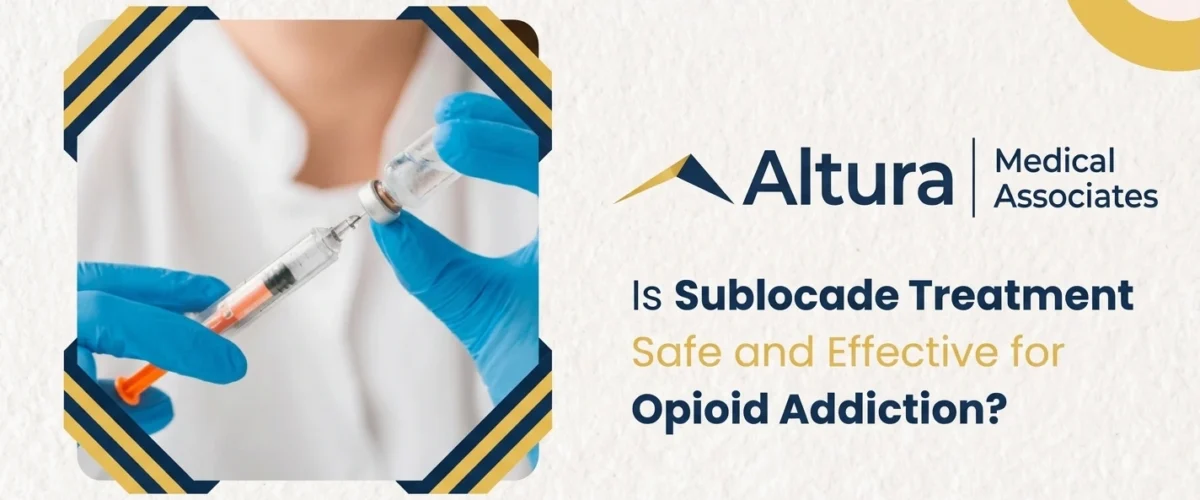
Sublocade is a long-acting injectable medication used to treat opioid use disorder. This is given by a trained health care professional once each month.

Sublocade is a monthly injection that gradually administers medication into your body. This reduces the need for daily doses and promotes more consistent treatment.

Several patients find it beneficial because it alleviates the burden of daily dosing and promotes recovery.

What Is Sublocade Used For?

It is mainly used for treating moderate to severe opioid use disorder.

It is part of a treatment plan that includes:

  • Medical care
  • Counseling
  • Emotional support
  • Recovery planning

At Altura Medical Associates, we use Sublocade as part of a full recovery plan. We combine medication with therapy and psychiatric care to support the whole person, not just the addiction.

Is Sublocade An Opioid?

Yes. But it works especially.

It has a medicine called buprenorphine. It helps the brain without giving a strong “high.”

Instead, it helps:

  • Reduce cravings
  • Prevent withdrawal symptoms
  • Block the effects of other opioids

Because of this, it is used as a safe medical treatment under supervision.

Does Sublocade Have Naloxone in It?

No, Sublocade does not have naloxone.

It has only one medicine called buprenorphine.

Naloxone is found in other medicines, like daily tablets or strips that people take at home.

Sublocade is different because:

  • It is an injection
  • It releases medicine slowly
  • It does not require naloxone protection

This makes it a simple monthly treatment option for many patients.

Is Sublocade Treatment Safe and Effective for Opioid Addiction?

Yes, for the right patient, Sublocade (extended-release buprenorphine) is considered effective and can be used safely under medical supervision. However, it is not risk-free.

The FDA states that Sublocade is indicated for adults with:

  • Moderate to severe opioid use disorder
  • Patients who have already started buprenorphine treatment

It should be used with counseling and psychosocial support.

In the main 24-week clinical study, Sublocade performed much better than placebo:

  • 28.4% and 29.1% of patients on Sublocade achieved treatment success
  • Only 2% of patients on placebo achieved success

The FDA label confirms that Sublocade was superior to placebo with statistical significance.

Sublocade is given through a restricted program due to its safety profile. The FDA warns of serious harm or death from vein injection, life-threatening respiratory depression and recommends having an overdose reversal agent like naloxone available.

So, the practical answer is: yes, it can be effective and appropriate if prescribed and monitored by a clinician for patients already on buprenorphine.

At Altura Medical Associates, we follow strict safety guidelines as a fully REMS Certified Sublocade Provider. This ensures each patient receives safe, regulated and professional care.

How to Get Sublocade Treatment

To begin treatment, a patient must:

  1. Meet with a certified medical provider
  2. Be diagnosed with opioid use disorder
  3. Start or already be on buprenorphine treatment
  4. Transition to monthly Sublocade injections

Only a trained healthcare worker can give the shot. You cannot buy it at a pharmacy or take it on your own.

If you are searching for Sublocade providers near me, it is important to choose a clinic that is certified and experienced in addiction treatment.

To learn more about our Sublocade treatment program, including who may qualify and what to expect, visit our Sublocade Treatment page.

Altura Medical Associates offers medication-assisted treatment, counseling and mental health support to help people achieve lasting recovery.

Side Effects Sublocade: Patients Should Know About

Like all medications, there are possible side effects that Sublocade users may experience.

Common side effects include:

  • Constipation
  • Headache
  • Nausea
  • Fatigue
  • Injection site pain or swelling

Most side effects are mild and improve over time as the body adjusts.

Less common but more serious effects may include:

  • Breathing problems
  • Severe allergic reactions
  • Liver issues

This is why regular follow-up with a medical provider is very important. We closely monitor every patient to make sure treatment stays safe and effective.

Final Thoughts

So, is Sublocade treatment safe and effective for opioid addiction?

For many adults, it can be. It is FDA approved, it is given by trained providers and it is meant to be used with counseling and support. But it is not right for everyone and it does carry real risks.

The safest path is a careful medical review and a treatment plan built around the person’s needs.

Take the Next Step

If you or someone you love is living with opioid use disorder, you do not have to face it alone. Reach out to Altura Medical Associates today to learn whether Sublocade may be a good fit.

Our REMS Certified team can help you build a plan with monthly treatment, therapy, psychiatric support and steady care. One call can be the start of a safer recovery path.

FAQs

Is Sublocade addictive?

‍It can cause physical dependence, but it is not considered addictive in the same way as illicit opioids.

‍Can you stop Sublocade suddenly?

Stopping should always be medically supervised to avoid withdrawal symptoms.

Can Addiction Develop as a Way to Cope with Difficult Emotions

Can Addiction Develop as a Way to Cope with Difficult Emotions?

Life hurts sometimes. It just does. We all get sad, mad, or scared. Those are big, heavy emotions. When these bad feelings get too loud, you might want them to stop right away so you can finally catch your breath. You just want a break from the pain. So, you look for a quick exit. Many people turn to alcohol or drugs to make the dark thoughts fade out. This is how an addiction starts. It is not about being a bad person – it is about trying to survive a hard day.

Hurting. That is what starts the loop. When you feel broken inside, you look for anything to patch up the cracks.

Why Do People Turn to Addiction?

Coping is a big word for a very simple idea. It just means how you deal with hard times. Some ways to cope are great for your body and mind. You can talk to a good friend or go for a long walk outside.

But other ways cause deep harm. Using drugs or alcohol to hide your feelings is a dangerous choice. People often choose this path when life drops too much weight on their shoulders and they feel completely crushed.

They might be facing:

  • Deep sadness that will not leave.
  • Big worries about tomorrow.
  • Bad memories (especially from scary things that happened long ago) that pop up out of nowhere.
  • Too much stress from school or a job.
  • Having no one to talk to.

The Trap of Escaping Your Feelings

‍It works at first. The drink makes the fear go away. Your brain feels calm. But that peace is a trick.

‍The drug always wears off. When it leaves your body, the old bad feelings come rushing back into your mind. Usually, they feel twice as heavy as they did before you took the drink.

This creates a scary loop:

  1. You feel sad or stressed.
  2. You take a substance to make it stop.
  3. The pain goes away for an hour.
  4. The pain comes back worse, so you take more.

Soon, your body and mind think they need the drug just to wake up in the morning. The main problem is still there. Now, you have a second problem too. That is how addiction wins.

How Altura Medical Associates Can Help

Stop fighting alone. You do not have to carry this heavy rock by yourself anymore. At Altura Medical Associates, we know that addiction is often just a cry for help from a hurting soul. We do not judge. We listen.

Doctor Aura Ardon leads our kind team. We help folks in Connecticut, Florida, New York and Nebraska. Our clinic is a safe, quiet space. We look at your whole mind and body to help you find real joy again.

Our Services for Healing

‍We do things differently here. Every single person who walks through our doors gets a custom plan made just for them. We mix different tools to help you mend.

  • Talk Therapy: We sit with you and listen to your story.
  • Substance Use Help: We blend therapy and medical care to help you quit safely.
  • Medication Management: Sometimes your brain chemistry needs a little help to feel balanced and steady.
  • Special Tools for Depression: If you are stuck in a dark place, we offer advanced care like Ketamine and Spravato.
  • Addiction Medicine: We use safe medical aids like MAT and monthly Sublocade shots to stop the cravings.

Steps to Start Feeling Better

Change takes time. It happens one small choice at a time.

  1. Reach out: Tell a doctor or a trusted friend that you need help.
  2. Find the root: Look deep to see what made you sad in the first place.
  3. Learn new skills: Try writing in a journal or taking slow, deep breaths when stress hits.
  4. Get a crew: Stay close to people who love you and want to see you heal.
  5. Be gentle: You will have bad days and that is completely okay.

Start Feeling Better Today

You are strong. Your past does not own your future. If you feel stuck, let us help you move forward.

The team at Altura Medical Associates believes in you. Contact us today to take that very first step toward a bright, clean life. You deserve to feel safe.

FAQs

Q. Can bad feelings really cause an addiction?

Yes. When emotions get too big, they can hurt. People just want the pain to stop fast. They might try a drink or a drug to hide from the sadness. It works for a little bit. Then, it wears off. The bad feelings come back even worse. That is how the trap starts.

Q. How does Altura Medical Associates help me get better?

We look at your whole self. We do not just look at the drug or alcohol problem. Our team wants to find out why you are hurting in the first place. We use kind talk therapy and safe medicines to heal your mind and body together.

Why Are More People Turning to Ketamine Therapy for Mental Health Treatment

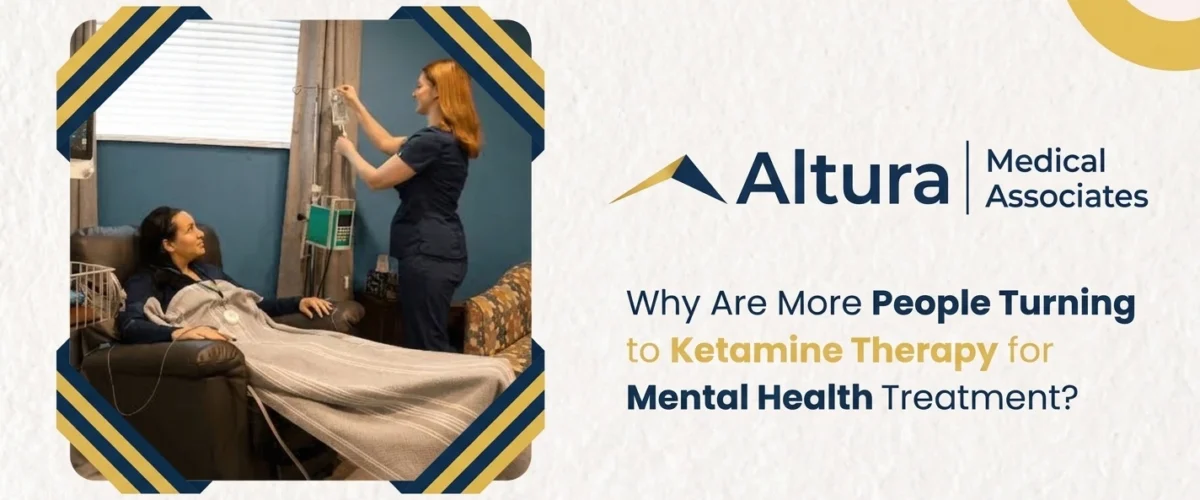
Why Are More People Turning to Ketamine Therapy for Mental Health Treatment?

More people are asking about Ketamine Assisted Psychotherapy(KAP) now. They want help that feels real. They want care that may help when other care has not worked well enough.

Mental health pain can be hard to carry. It can make days feel heavy. It can make it hard to sleep. It can make work, school and family life feel hard too.

That is why Ketamine Assisted Psychotherapy(KAP) is getting more attention. When exploring what is Ketamine Assisted Psychotherapy some people see it as a new path when they feel stuck.

Why People Look at Ketamine Assisted Psychotherapy

Individuals typically don’t seek Ketamine Assisted Psychotherapy as their initial option. Many try other treatments first. They may try talk therapy. They may try medicine. They may try both. Some people still do not feel better.

That can feel upsetting. It can also make a person feel tired and hopeless.

Ketamine Assisted Psychotherapy is getting more notice because some people feel it may help when other options have not helped enough. For many, that brings hope as they learn about the benefits of ketamine-assisted therapy.

People may turn to it because:

  • They have tried other care and still feel bad
  • They want a new option
  • They want care that feels more personal
  • They want support from a trained team
  • They want hope after a long, hard time

It Can Feel Like a Fresh Start

When someone has struggled for a long time, even one new option can feel big. Ketamine Assisted Psychotherapy may feel like a fresh start for some people. It gives them something new to try. That alone can matter.

When people feel stuck, they often want two things most of all:

  • Relief
  • Hope

Ketamine Assisted Psychotherapy may offer benefits for some people.

What People Hope It Can Help With

Many people ask about Ketamine Assisted Psychotherapy when they are dealing with deep sadness or long-term stress.

They may feel:

  • Very low
  • Empty
  • Tired all the time
  • Stuck in sad thoughts
  • Cut off from life
  • Worried all day

Many individuals dealing with constant worry frequently ask, “How does Ketamine Assisted Psychotherapy work for anxiety?” Some people have tried many other ways to feel better. They still do not feel like themselves. That is one reason they look for a new kind of help.

Why a Personal Plan Matters

Mental health care should never feel cold or rushed. People need to feel heard. They need time. They need a plan that fits them. That is why personal care matters so much.

A good care team looks at the whole person. They do not just look at one symptom. They look at sleep, stress, mood, family life and medical history too.

That kind of care can help people feel safe. It can also help them feel more open to treatment.

What a Care Team May Do

Before Ketamine Assisted Psychotherapy starts, a care team should check if it is a good fit.

This may include:

  1. A full talk about symptoms
  2. A look at past treatment
  3. A review of health history
  4. A safety check
  5. A plan made just for that person

This step matters. It helps make care more thoughtful and safe.

People often feel calmer when they know someone is taking time with them.

Why People Like the Idea of Fast Help

Many people with mental health pain feel worn out.

They may have spent months or years trying to feel better. So when they hear about a treatment that may work faster than some other options, they pay attention. That does not mean it works for everyone. It also does not mean it is right for every person. But for some, the chance of faster relief is a big reason they ask about it.

A Gentle Way to Think About It

Ketamine Assisted Psychotherapy is not about a quick fix. It is about giving some people another path when they need one.

A basic approach to understanding it is:

  • Some people need more than one kind of help
  • Some people need a new option
  • Some people need hope again
  • Some people need a plan that feels made for them

That is why Ketamine Assisted Psychotherapy is becoming more common in mental health care settings.

Support Matters Too

Treatment works better when people feel supported. A kind team can make a big difference. At Altura Medical Associates, we believe people deserve compassionate support throughout their mental health journey. Feeling heard and respected can help build trust and confidence in treatment.

Support can come from:

  • A caring provider
  • A therapist
  • Family
  • Friends
  • A simple routine at home

Mental health care is not only about one visit. It is about steady support over time.

What People Want from Care Today

Many people want care that feels:

  • Human
  • Honest
  • Calm
  • Clear
  • Respectful

They wish to avoid being treated as just a number. They want to feel seen.

That is one reason ketamine therapy is getting more interest. It is often discussed as part of a full care plan, not as the only answer.

A Bigger Picture of Healing

Healing can take time. It can also take many kinds of care.

Some people may need:

  • Therapy
  • Medicine
  • Follow-up visits
  • Rest
  • Healthy habits
  • Support from loved ones

Ketamine therapy may be one part of that bigger picture.

For many people, the goal is not only to feel a little better. The goal is to feel like life is opening up again.

Why Choose Altura Medical Associates?

At Altura Medical Associates, we offer caring mental health support for everyone. This encompasses children, teenagers, adults and the elderly. We create tailored treatment plans for all.

We listen and help people find the right mental health treatment. We help individuals and families. We support their mental wellness. We do this with respect and understanding.

Final Thoughts

More people are turning to ketamine therapy because they want hope. They want relief. They want help that may work after other care has not worked.

They also want care that feels personal and kind.

That is why this treatment is getting more attention now. For some people, it may be the next step that helps them move forward.

FAQs

Q. Does ketamine therapy get you high?

While some patients experience mild dissociative effects during the session, it is administered in a strictly controlled, clinical setting to promote healing.

Q. What happens before treatment starts?

You will usually have an evaluation. This helps the care team learn about your needs and create a treatment plan.

How Does Substance Use Disorder Impact Emotions and Decision Making

How Does Substance Use Disorder Impact Emotions and Decision-Making?

Substance use disorder can alter the feelings, thoughts and choices in a person’s life. It can turn the small problems into a big problem. It can also diminish the ability to stop, think and select the best course of action. Addiction changes parts of the brain involved in judgment and decision-making. NIMH reports that many people with substance abuse issues also have mental health problems.

What Substance Use Can Do to Feelings

Substance use, whether alcohol or drugs, can result in shifts in emotions. This can present as emotions of sadness, anger, or a sense of emptiness.

A person may also notice these signs of emotional dysregulation:

  • More mood swings
  • Faster anger or emotional outbursts
  • More fear or worry
  • Less patience
  • Less joy in things they used to like

These adjustments can make daily life feel burdensome. They also complicate relationships, school and work while disrupting essential rest.

Why Decisions Get Harder

‍Good choices need a clear mind. Substance use disorder can make the brain focus more on the next drink or the next dose and less on long-term results. NIDA explains that addiction is linked with brain changes in areas tied to judgment and decision-making, often leading to cognitive dysregulation.

This shift can directly result in bad decision making in real life, such as:

  • Choosing a quick high over a safe plan
  • Saying yes to things that feel risky
  • Forgetting past problems
  • Acting fast without thinking
  • Promising to stop, then using again

This is not about being weak. It is about a brain and body that need help.

Why Emotions and Choices Feed Each Other

Emotions and choices can get stuck in a loop. A hard feeling shows up. The person uses a substance to feel better. The substance may help for a short time. Then the feeling comes back stronger, sometimes with shame or regret.

That loop can grow over time:

  1. Stress starts.
  2. The person feels pain, fear, or anger.
  3. Substance use feels like relief.
  4. Problems grow.
  5. The person feels worse and may use again.

This loop can be hard to break alone. It is one reason support matters so much.

Signs It May Be Affecting Daily Life

Substance use disorder can show up in many small ways before it becomes very big. Some signs are easy to miss at first.

Look for things like:

  • Missing work, school, or family plans
  • Lying about use
  • Pulling away from loved ones
  • Taking bigger risks
  • Fighting more often
  • Spending a lot of time getting or using substances
  • Feeling hopeless, cranky, or very low

NIMH notes that substance use and mental health concerns can overlap, so careful support is important when more than one problem is going on.

How Healing Can Help

sRecovery is not just about stopping use. It is also about restoring emotional balance and learning new ways to handle feelings and choices. Good care can help a person slow down, think more clearly and build stronger habits.

Helpful support may include:

  • Talk therapy
  • Coping skills
  • Medication when needed
  • Family support
  • A safe plan for triggers
  • Regular check-ins with a clinician

NIMH suggests a full assessment for people with substance use and mental health issues. They also recommend a treatment plan. Therapeutic approaches such as cognitive behavioral therapy and motivational interviewing are beneficial.

How Altura Medical Associates Helps

Altura Medical Associates provides a holistic approach to substance use care. Their site says treatment can include psychotherapy, medication when appropriate and coping strategies that support long-term recovery and emotional well-being. They also start with a full mental health assessment so care can be tailored to the person’s needs.

Their substance use pages also describe outpatient care for alcohol use disorder and opioid use disorder, with psychiatric support and trauma-informed care. Their team emphasizes a strong therapeutic relationship built on trust, empathy and collaboration.

Small Steps That Can Make a Big Difference

Recovery often grows from small steps. A person does not need to fix everything in one day. One kind choice can lead to the next.

Helpful steps may include:

  • Tell one trusted person
  • Keep a simple daily routine
  • Eat regular meals
  • Sleep at steady times
  • Avoid places that trigger use
  • Write down feelings instead of hiding them
  • Ask for professional help early

These steps may seem small, but they can help the mind feel safer. A safer mind often makes better choices.

Final Thought

Substance use disorder can touch emotions, thoughts and decision-making at the same time. It can make life feel confusing and painful. But change is possible. With the right care, people can learn new habits, feel steadier and make clearer choices again. Altura Medical Associates helps with healing. They provide personalized care in Danbury, CT. You can visit in person or use telehealth options.

FAQs

Q. Why do some people keep using even when they want to stop?

Substance use can change how the brain works. This can make stopping very hard without help.

Q. Can treatment help with emotions?

Yes. Treatment can teach healthy ways to handle stress, sadness, anger and other feelings.

How to Praise Your ADHD Child to Build Confidence

How to Praise Your ADHD Child to Build Confidence?

Raising a child with ADHD can feel like a big journey. Some days are full of joy. Other days feel hard and confusing. Your child is energetic and may have trouble focusing and following directions.

In all of this, your words have a big impact on your ADHD child and how they see themselves. Good praise can reduce your ADHD child’s negative self-talk and help build strong confidence.

At Altura Medical Associates, we are here to help you turn these simple praise skills into daily support that truly works for your family. Our ADHD Parent Coaching and Behavioral Support Services are made to guide you step by step so that you can build a calmer home and improve self-esteem and ADHD challenges in your child.

Below, we will guide you through simple steps to praise your ADHD child in a way that builds real confidence.

Why Praise Matters So Much for ADHD Children

‍Children with ADHD often hear a lot of corrections. They can hear these words repeated thousands of times a day: ‘stop’, ‘no’, or ‘try again’. They may gradually come to think that they are at fault in every way.

‍This can hurt their self-belief.

Praise works like a light. It helps your child see what they are doing right. It supports ADHD self-awareness and helps them understand their strengths.

When praise is done the right way, it can help your child:

  • Feel proud of small wins
  • Try harder without fear
  • Build emotional strength
  • Feel loved and accepted

Even small words can make a big difference in their day.

How to Praise Your ADHD Child to Build Confidence?

Praise the Effort, Not Just the Result

Many parents praise only big results like good grades or perfect behavior. But for ADHD children, effort is more important than outcome.

Your child may try very hard, even if the result is not perfect. That effort deserves attention.

Instead of saying:

“You are so smart.”

Try saying:

“You worked very hard on that homework.”

Instead of:

“Good job getting an A.”

Try:

“I saw you stayed focused for 10 minutes. That was a great effort.”

This type of praise teaches your child that trying is just as important as winning.

Be Specific with Your Praise

‍General praise like “Good job” is nice, but it can feel empty. ADHD children benefit more when they know exactly what they did well.

Be clear and simple.

For example:

  • “You put your shoes away when I asked you. That was responsible.”
  • “You waited your turn while talking. That shows patience.”
  • “You cleaned your toys without being reminded. That helped our home.”

Specific praise helps your child understand which behaviors are good. It also helps them repeat it in the future.

Praise Small Wins Every Day

ADHD children often struggle with big tasks. A big job can feel too heavy. That is why small wins matter so much.

Break your child’s day into small chances to succeed. Then notice those small moments.

For example:

  • Getting dressed on time
  • Sitting for a short meal
  • Finishing one page of homework
  • Sharing with a sibling

When you notice these small wins, say it out loud.

“I saw you finished your breakfast. That was a good start to your day.”

These small praises build big confidence over time.

Help Calm Big Emotions First

Sometimes, before praise, a child needs help calming down. Learning how to calm down a child with ADHD is very important.

Use simple grounding techniques to calm the child. You can say:

  • “Take a slow breath with me.”
  • “You are safe. Let’s pause together.”

Once calm, praise works better and helps learning.

‍Do Not Praise Everything

Too much praise can stop feeling special.

Be honest and calm when you praise your child. Focus on real effort and good choices.

This helps your child trust your words.

Praise Progress, Not Perfection

ADHD is not about being perfect. It is about learning step by step.

Your child may forget things or make mistakes.

That is okay.

You can say:

  • “You did better today.”
  • “I see you are trying.”
  • “You are improving.”

This teaches children that learning takes time.

Use Body Language with Words

Praise is not only about words. Your face, tone, and body matter too.

Smile when you praise your child. Look at them when you speak. Use a soft and kind voice.

A hug or a gentle pat on the shoulder can make your praise even stronger.

Children feel safe through warmth. This helps them accept your praise more deeply.

Praise During Hard Moments Too

‍Sometimes your child may still be trying even when things feel hard.

You can say:

  • “I see you are trying to calm down.”
  • “I know this is hard, but you are still trying.”
  • “You did not give up.”

This helps build emotional strength.

‍Teach Your Child to Praise Themselves

Help your child notice their own good choices.

‍Ask:

  • “What did you do well today?”
  • “What made you proud today?”

At first, they may need help answering. Over time, they will learn to see their own progress.

Keep Praise Simple and Clear

Children with ADHD may feel overwhelmed by long talks. Keep your praise short.

Simple words work best:

  • “Good effort.”
  • “Well done.”
  • “I noticed that.”
  • “You did it.”

Short praise is easier to understand and remember.

Avoid Comparing Your Child to Others

Every child is different. ADHD children, especially, may develop skills at a different pace.

omparing them to siblings or classmates can hurt their confidence.

Instead of saying:

“Why can’t you be like your sister?”

Try:

“You are learning in your own way, and I am proud of your progress.”

This helps your child feel safe and accepted

Make Praise a Daily Habit

Try to notice three good things your child does every day.

‍You can praise:

  • Trying to listen
  • Starting homework
  • Helping at home

Daily praise helps children believe in themselves.

Learn About Your Child’s Needs

Every ADHD child is different.

Some children are very active. Some have big feelings. Some get distracted easily.

Learning about your child’s strengths and struggles can help you give better support and praise.

When Parenting Feels Overwhelming, Support Helps

Supporting an ADHD child is not always easy. Some days may feel exhausting. You may feel unsure about what to say or how to react.

At Altura Medical Associates, we help families with children who have ADHD and need extra support.

We offer ADHD Parent Coaching and Behavioral Support Services. We work with parents and children together.

We help you:

  • Understand your child’s unique triggers
  • Discover your child’s strengths
  • Learn how to give meaningful praise
  • Build confidence in your child step by step
  • Reduce daily stress and confusion at home

Our goal is to help parents feel confident and supported while ensuring children feel loved, safe, and understood.

Final Thoughts

Praising an ADHD child is not about saying perfect words. It is about noticing effort, showing love and guiding behavior with kindness. Speaking differently can greatly impact how your child feels about themselves.

Your child does not need perfection. They need understanding, patience and steady encouragement.

If you are ready to build a more peaceful and confident home, support is available.

Connect with Altura Medical Associates today. Start your journey. Improve your communication. Build stronger confidence. Enjoy a happier family life.

‍FAQs

Do people with ADHD get embarrassed easily?

Yes, if they think they are being judged or compared.

Is indecision a symptom of ADHD?

Yes. ADHD can make decision-making harder sometimes.

What type of praise works best for ADHD kids?

Simple, specific and honest praise works best.

Why Do People Avoid Seeking Help for Depression

Why Do People Avoid Seeking Help for Depression?

Living with depression is tough. It causes sadness, fatigue, and numbness, making people stop doing things they enjoy. Others find themselves carrying a very heavy weight throughout the day, often feeling unsatisfied with life.

Many do not ask for help, even when they need it. There are many reasons for this. Some are afraid. Some feel ashamed. Others don’t know where to begin. Some people believe that they should face it alone.

Why People Stay Quiet

Many people do want help. They just do not speak up.

Some think:

  • “My problem is not big enough”
  • “I should be strong”
  • “People may judge me”
  • “I do not want to bother anyone”
  • “Perhaps this will resolve itself without intervention”

Getting caught in these thoughts keeps a person stuck. Depression already makes it hard to act, and worry and fear make it even harder.

Shame Can Stop People

Shame is a strong feeling. It can make a person think that they need to suppress their emotions. Others believe that experiencing it makes them weak. Some believe that they should work harder. Some might sense they are on the losing end, particularly when they are left in doubt, “Why do I feel so hopeless?” and cannot seem to “snap out of it.”

But depression is not a sign of failure. It’s a true health issue. It needs care, not blame.

When people sense they are understood, they are more likely to seek assistance.

Fear of Being Judged

Many individuals worry about others’ opinions.

They may worry about what others think. Worrying about being seen as “lazy” or “crazy” can lead them to hide their pain.

A caring mental health team can help with this. Altura Medical Associates provide a full-person approach with care. It’s about the individual, showing that they are valued.

Some People Do Not See the Signs

‍Depression does not always look the same in every person. Some people cry a lot. Some do not cry at all. Some sleep too much. Some can hardly sleep. Some feel sad, while others spend days feeling hopeless and blank.

Because of this, people may not know they are dealing with depression. They might believe they are merely anxious, fatigued, or attempting to understand how to manage mood swings.

Here are some signs that may show a person needs help:

  • ‍They feel sad for a long time
  • They lose interest in things they liked before
  • They feel tired all the time
  • They have trouble sleeping
  • They feel very worried or empty
  • They find it hard to get through the day

If these signs keep going, support may help.

Life Can Make It Hard to Ask

Sometimes a person knows they need help, but life gets in the way.

They may be:

  • Busy with work
  • Caring for kids
  • Managing school
  • Worried about money
  • Too tired to make a call
  • Unsure how to begin

That is why flexible care matters. Altura Medical Associates offer telehealth visits and in-person visits. This can make it easier for people to get support in a way that fits their day.

Fear Of Treatment Can Hold People Back

Some people are afraid of therapy or medicine.

They may wonder:

  • Will therapy be hard?
  • Will I have to discuss tough issues?
  • Will medicine change me?
  • What if help does not work?

These worries are normal. A good provider should explain things calmly and clearly. Help should never feel rushed or scary.

At Altura Medical Associates, treatment can include therapy, medication and counseling. The goal is to give support that fits the person, not force one plan for all.

Some People Think They Must Handle It Alone

Many people were taught to stay strong and keep going.

They may say:

  • “I do not need help.”
  • “I can fix this myself.”
  • “Other people have it worse.”
  • “I should be able to do this alone.”

But no one should have to carry depression, or the heavy weight of feeling unsatisfied with life, by themselves. Asking for help is not weak. It is a smart and brave step.

What Helps People Reach Out

Sometimes the first step is the hardest. But small steps can help.

Try these simple steps:

  1. Tell one trusted person how you feel.
  2. Write down your feelings and symptoms.
  3. Book one visit.
  4. Ask what therapy or treatment may look like.
  5. Take one step at a time.

You do not need to fix everything at once.

What Support May Look Like

Support for depression can look different for each person.

It may include:

  • Talk therapy
  • Medication support
  • Counseling
  • Family support
  • Follow-up care
  • A plan made for the person’s needs

Altura Medical Associates works with people across the lifespan. They help children, teens, adults, couples and families. They also support people with depression and other mental health needs. This wide care can help when life feels heavy.

A Kind Reminder

People avoid help for depression for many reasons. They may feel shame. They may fear judgment. They may not know what to do next. They may be too tired to start.

But help is still worth seeking.

Depression can get better with care. A kind provider can help a person feel heard, supported and less alone.

‍Altura Medical Associates offers care that is personal, flexible and focused on the whole person. For someone who has been hurting in silence, that kind of support can be a strong first step.

FAQs

Q. Why do people wait to ask for help?

They may think their pain is not big enough, or they may feel they should handle it alone.

Q. Is depression a weakness?

No. Depression is a real health problem, and it should be treated with care.

What Are the Signs That Depression Therapy Is Working

What Are the Signs That Depression Therapy Is Working?

Living with depression is tough. It causes sadness, fatigue, and numbness, making people stop doing things they enjoy. Others find themselves carrying a very heavy weight throughout the day, often feeling unsatisfied with life.

Many do not ask for help, even when they need it. There are many reasons for this. Some are afraid. Some feel ashamed. Others don’t know where to begin. Some people believe that they should face it alone.

Why People Stay Quiet

Many people do want help. They just do not speak up.

Some think:

  • “My problem is not big enough”
  • “I should be strong”
  • “People may judge me”
  • “I do not want to bother anyone”
  • “Perhaps this will resolve itself without intervention”

Getting caught in these thoughts keeps a person stuck. Depression already makes it hard to act, and worry and fear make it even harder.

Shame Can Stop People

Shame is a strong feeling. It can make a person think that they need to suppress their emotions. Others believe that experiencing it makes them weak. Some believe that they should work harder. Some might sense they are on the losing end, particularly when they are left in doubt, “Why do I feel so hopeless?” and cannot seem to “snap out of it.”

But depression is not a sign of failure. It’s a true health issue. It needs care, not blame.

When people sense they are understood, they are more likely to seek assistance.

Fear of Being Judged

Many individuals worry about others’ opinions.

They may worry about what others think. Worrying about being seen as “lazy” or “crazy” can lead them to hide their pain.

A caring mental health team can help with this. Altura Medical Associates provide a full-person approach with care. It’s about the individual, showing that they are valued.

Some People Do Not See the Signs

‍Depression does not always look the same in every person. Some people cry a lot. Some do not cry at all. Some sleep too much. Some can hardly sleep. Some feel sad, while others spend days feeling hopeless and blank.

Because of this, people may not know they are dealing with depression. They might believe they are merely anxious, fatigued, or attempting to understand how to manage mood swings.

Here are some signs that may show a person needs help:

  • ‍They feel sad for a long time
  • They lose interest in things they liked before
  • They feel tired all the time
  • They have trouble sleeping
  • They feel very worried or empty
  • They find it hard to get through the day

If these signs keep going, support may help.

Life Can Make It Hard to Ask

Sometimes a person knows they need help, but life gets in the way.

They may be:

  • Busy with work
  • Caring for kids
  • Managing school
  • Worried about money
  • Too tired to make a call
  • Unsure how to begin

That is why flexible care matters. Altura Medical Associates offer telehealth visits and in-person visits. This can make it easier for people to get support in a way that fits their day.

Fear Of Treatment Can Hold People Back

Some people are afraid of therapy or medicine.

They may wonder:

  • Will therapy be hard?
  • Will I have to discuss tough issues?
  • Will medicine change me?
  • What if help does not work?

These worries are normal. A good provider should explain things calmly and clearly. Help should never feel rushed or scary.

At Altura Medical Associates, treatment can include therapy, medication and counseling. The goal is to give support that fits the person, not force one plan for all.

Some People Think They Must Handle It Alone

Many people were taught to stay strong and keep going.

They may say:

  • “I do not need help.”
  • “I can fix this myself.”
  • “Other people have it worse.”
  • “I should be able to do this alone.”

But no one should have to carry depression, or the heavy weight of feeling unsatisfied with life, by themselves. Asking for help is not weak. It is a smart and brave step.

What Helps People Reach Out

Sometimes the first step is the hardest. But small steps can help.

Try these simple steps:

  1. Tell one trusted person how you feel.
  2. Write down your feelings and symptoms.
  3. Book one visit.
  4. Ask what therapy or treatment may look like.
  5. Take one step at a time.

You do not need to fix everything at once.

What Support May Look Like

Support for depression can look different for each person.

It may include:

  • Talk therapy
  • Medication support
  • Counseling
  • Family support
  • Follow-up care
  • A plan made for the person’s needs

Altura Medical Associates works with people across the lifespan. They help children, teens, adults, couples and families. They also support people with depression and other mental health needs. This wide care can help when life feels heavy.

A Kind Reminder

People avoid help for depression for many reasons. They may feel shame. They may fear judgment. They may not know what to do next. They may be too tired to start.

But help is still worth seeking.

Depression can get better with care. A kind provider can help a person feel heard, supported and less alone.

‍Altura Medical Associates offers care that is personal, flexible and focused on the whole person. For someone who has been hurting in silence, that kind of support can be a strong first step.

FAQs

Q. Why do people wait to ask for help?

They may think their pain is not big enough, or they may feel they should handle it alone.

Q. Is depression a weakness?

No. Depression is a real health problem, and it should be treated with care.

What Makes Individualized Therapy Important for Kids and Teens

What Makes Individualized Therapy Important for Kids and Teens?

Every child and teen is different. They think in different ways. They feel emotions in different ways. They learn and grow at their own speed. Due to this, one kind of support does not work for everyone.

This is where individualized therapy becomes very important.

At Altura Medical Associates, we provide individualized therapy for kids and teens. Our online services in California ensure that young people get the support they need safely and comfortably.

Below, we will talk about what makes individualized therapy important for kids and teens.

Understanding Individualized Therapy

Individualized therapy is a personalized treatment plan designed specifically for one child. It is built after carefully understanding their:

  • Emotions and thought patterns
  • Behavior at home and school
  • Social interactions
  • Triggers, fears, and stressors
  • Strengths and coping abilities

This can easily develop and change with the increasing age of the child, and in these ways, they receive the right support at every stage.

At Altura Medical Associates, care grows with your child.

What Makes Individualized Therapy Important for Kids and Teens?

Childhood and adolescence are not just “smaller versions” of adulthood. They are fast-paced times for brain growth, identity building and social challenges. Because every young person reacts to these changes differently. A “one-size-fits-all” approach often fails.

Here is why individualized therapy is the gold standard for supporting the next generation:

1.Care That Matches Developmental Stage

A 10-year-old and a 16-year-old can both feel anxious. But they show it in different ways.

Children may not have the words to express their emotions. They exhibit signs of distress such as tantrums, withdrawal, altered sleep patterns and appetite. Adolescents, in turn, can conceal their emotions, become annoying, or feel unexpressed in terms of emotions.

These differences are accommodated in individualized therapy. Therapists choose age-appropriate methods such as:

  • Play-based techniques for younger children
  • Talk therapy for teens
  • Creative tools like art or journaling when words feel difficult

Children participate more in therapy when it fits their developmental phase.

2.More Accurate Understanding of What’s Really Going On

Children and teens with mental health issues do not necessarily manifest easily. Symptoms often overlap.

As an example, an apparently irritable, unmotivated, or distracted teen may be experiencing anxiety, depression, ADHD, or some combination of these.

Individualized therapy focuses on understanding the complete picture and not just the individual behaviors. Clinicians can diagnose the underlying cause of the troubles, as opposed to merely treating the presenting symptoms.

This matters because the right diagnosis leads to the right support. And the right support leads to real improvement.

At Altura Medical Associates, we utilize thoughtful evaluation and tools, such as QBtech, for accurate ADHD assessments when needed.

3.Supporting the Whole Family System

A child’s emotional well-being is linked to their home environment. That’s why individualized therapy often includes family to support the child.

Parents play a key role, but they may not always know how to:

  • Respond to emotional outbursts
  • Support academic stress
  • Encourage healthy communication

At Altura Medical Associates, we help bridge that gap by guiding parents with practical tools such as:

  • Effective communication strategies
  • Calm responses to big emotions
  • Healthy routines
  • Clear, supportive boundaries

The collaboration between parents and therapists allows uniformity that enhances positive and lasting outcomes among kids.

4.Addressing Modern-Day Stress in Young People

Today’s kids and teens grow up in a very different world. They face pressures that past generations didn’t, like:

  • Constant social media comparison
  • Online bullying or peer pressure
  • Academic competition and burnout
  • Less face-to-face connection
  • Uncertainty about the future

These issues may damage self-esteem, concentration, sleep and mood.

Individualized therapy takes into account each child’s real-life environment. Treatment does not just adopt the one-size-fits-all approach but, rather, emphasizes what kids encounter in everyday life.

At Altura Medical Associates, we customize therapy to meet the current realities.

For example:

  • A teenager experiencing social media anxiety can also be informed about boundaries on using social media and what exercises can be performed to build self-worth.
  • When a child is intimidated by school stress, they are likely to learn how to handle stress and study skills.
  • A socially anxious adolescent can slowly gain confidence by using methods of safe exposure.

Therapy is effectively and practically implausible when it deals with real-life stressors.

5.Building Long-Term Emotional Strength

Many problems with feelings can start when people are young. If these problems are not addressed early, they can grow bigger and harder later.

Individualized therapy is not only beneficial in the meantime. It teaches children and teens to develop skills that they can employ throughout their lifetime, such as:

  • Knowing and naming their feelings
  • Staying calm when they feel stressed
  • Talking to others in a better way
  • Getting strong again after hard times
  • Feeling good and confident about themselves

Sometimes, therapy can also involve lifestyle modifications, educational assistance in schools, or medications. This is not just short-term relief, but long-term emotional strength and stability.

Early help for children prepares them for school, friendships and life’s challenges.

A Holistic Approach to Care

Individualized therapy is fundamentally about viewing the child as a complete person, and not merely a collection of symptoms or behavior. Each of the children has their own narrative, character, likes and dislikes. Good therapy takes note of such individuality.

When care is customized, children will feel better understood, safe and supported. This emotional security can be taken as the initial phase of healing and development.

At Altura Medical Associates, we treat the whole child to bring them to a state of well-being that enhances their happiness.

Conclusion

Individualized therapy is crucial since each child and adolescent is distinct. Their feelings, thoughts and struggles vary. They require support tailored to their individuality.

With the right support, children can learn how to handle their feelings. They can grow stronger emotionally. They can do better in school and build better relationships.

Therapy provides them with life tools. It provides them with comprehension. It gives them hope.

If your child or teen is struggling with emotions, behavior, or stress, reach out to Altura Medical Associates today to learn how individualized therapy can help your child feel more confident, calm and supported. A better tomorrow can start with one simple step today.

FAQs

Can parents join therapy?

Yes. Parents can be part of the process to help their child at home.

Is individual therapy better than group therapy?

Both are helpful. Individual therapy focuses on one child, while group therapy helps with social skills.

Will Spravato Interfere with My Existing Psychiatric Care

Will Spravato Interfere with My Existing Psychiatric Care?

When you are already getting psychiatric care, it is normal to feel unsure about adding something new.

Many people ask if Spravato treatment will change or interrupt the care they already receive. This is an important question and we want to give a clear and simple answer.

At Altura Medical Associates, we understand your concerns. Your care plan is important. Your safety and comfort matter.

Below, we will help you understand how Spravato fits with your current psychiatric care simply and clearly.

‍What Is Spravato Used For?

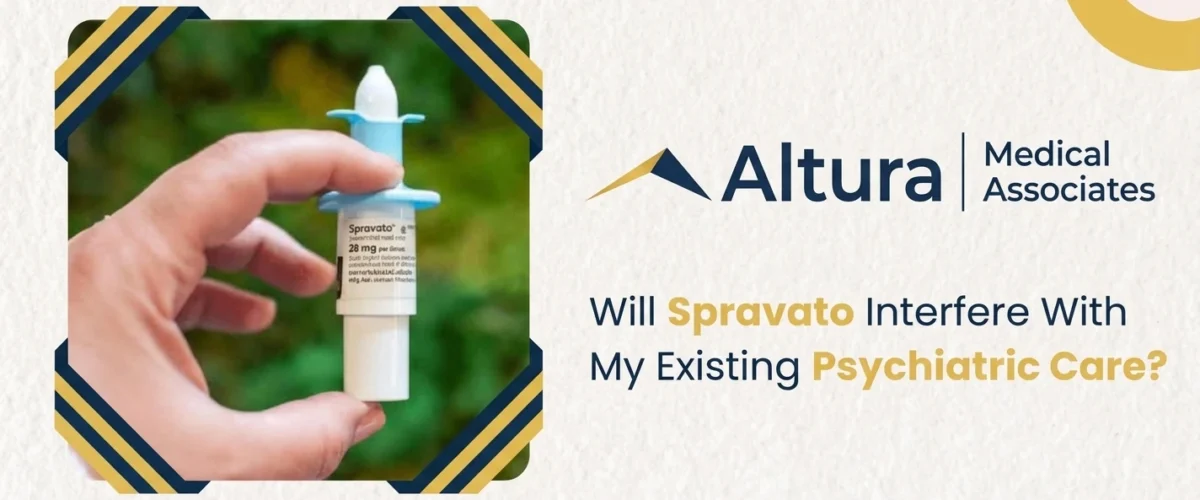
‍Spravato is a special nasal spray used to treat depression that has not improved with other treatments. It is approved by the FDA and used in a medical setting under close care.

Unlike ordinary antidepressants, Spravato is not the same. It does not merely alter the chemicals, such as serotonin, but rather assists the brain in establishing new connections. These connectios can enhance mood, cognitive and emotional reactions in the long run.

How Fast Does Spravato Work?

One of the reasons people ask about Spravato is because of how quickly it may work.

‍Some people experience a difference in mood after a few hours or days. It might take other people a couple of sessions to feel better.

This is different from many antidepressants, which may take several weeks to work.

Even though everyone has a different experience, Spravato gives people hope when they are immobilized in their current therapy.

Will Spravato Interfere with My Existing Psychiatric Care?

This is the main concern for many patients, and the answer is reassuring.

Spravato does not replace your current psychiatric care. It works alongside it.

In most treatment plans, you can continue to:

  • Take your current antidepressant or other medications
  • Attend therapy or counseling sessions
  • Follow your existing mental health routine
  • Work with your current psychiatrist or provider

This is called a combined care approach. Instead of replacing anything, Spravato adds another layer of support.

At Altura Medical Associates, your provider carefully reviews your full treatment plan before starting Spravato. This ensures everything works together safely.

How Spravato Works with Your Psychiatrist

When you begin Spravato treatment, your care does not become disconnected. In fact, it becomes more closely coordinated.

Your care team may include:

  • A psychiatrist
  • A Spravato treatment provider
  • A therapist or counselor

These professionals work together to assist you in your mental health in various ways.

At Altura Medical Associates, we make sure:

  • Your treatment plan is coordinated
  • Your progress is tracked regularly
  • Your medications are reviewed carefully
  • Your safety is always the top priority

This teamwork helps prevent any conflict between treatments. Instead, it creates a strong and connected care plan.

What Happens During Spravato Treatment?

Spravato is not taken at home. It is given in a certified healthcare setting where trained staff can monitor you.

A typical visit includes:

  1. You arrive at the clinic and are checked in
  2. You take the nasal spray under supervision
  3. You relax in a comfortable room
  4. Medical staff monitor you for side effects
  5. You leave only when it is safe

Each session usually lasts about two hours.

Due to ongoing oversight, your current psychiatric treatment is secure and supported.

What Your Treatment Schedule Will Look Like

Spravato follows a set schedule.

  • First month: Two sessions per week
  • Second month: One session per week

After that, your provider may adjust your schedule based on how you feel.

This plan helps your body respond to the treatment in a steady way.

Can Spravato Affect My Current Medications

Many people worry about drug interactions and this is an important question.

Spravato can be used in combination with other antidepressants and psychiatric drugs in most cases safely. But each individual is different.

Before starting, at Altura Medical Associates, we review your full medical history, including:

  • Current medications
  • Past treatments
  • Any health conditions

If any changes are needed, we guide you through the processes. Our goal is to make sure everything works together smoothly.

Possible Side Effects

Like all treatments, Spravato can lead to side effects. The most common ones are:

  • Sleepiness
  • Dizziness
  • Nausea
  • Mild increase in blood pressure

These are generally short-term effects, occurring at the time of or following treatment.

Because you are in a medical setting, the staff can help right away if needed. This keeps you safe and comfortable.

Does Spravato Change Therapy or Counseling

No, therapy remains an important part of your care. In fact, many people find that therapy works even better when their mood improves with Spravato.

You may notice:

  • Easier communication in sessions
  • Better emotional awareness
  • More energy to talk about difficult feelings
  • Improved focus during therapy

This means Spravato can support your therapy rather than disrupt it.

Who May Benefit from Spravato?

Spravato may be considered if:

  • You have tried at least two antidepressants without enough improvement
  • You are diagnosed with treatment-resistant depression
  • Your symptoms are acute or chronic
  • You are working closely with a mental health provider

At Altura Medical Associates, each patient is carefully evaluated to ensure Spravato is a safe and appropriate option.

Why Coordination of Care Matters

Mental health care works best when everything is connected. That is why we focus on clear communication and teamwork.

At Altura Medical Associates, we:

  • Keep all providers informed
  • Adjust treatments when needed
  • Listen to your concerns
  • Track your progress over time

This ensures that Spravato enhances your care instead of interfering with it.

What Patients Often Experience with Spravato

Many patients report positive changes, such as:

  • Feeling relief sooner than expected
  • Having more energy
  • Sleeping better
  • Feeling more hopeful

These improvements can make it easier to stay engaged in therapy and daily life.

Final Thought

If you are asking, “Will Spravato interfere with my existing psychiatric care?” the answer is clear.

No. It is designed to support your care, not disrupt it.

At Altura Medical Associates, we are proud to provide more comprehensive treatments that offer actual hope. Our team is ready to help you explore whether Spravato is the right step for you.

You deserve care that works. You deserve to feel better.

Take the Next Step Today

Act now if you or someone you love is struggling with depression that isn’t getting better.

Call Altura Medical Associates to make your appointment.

We can assist you in developing a treatment plan. This plan will aid your recovery, enhance your care and guide you toward a better future.

FAQs

Can I go back to work after a Spravato session?

During treatment, you are not supposed to drive or come to work immediately after the treatment. The majority of individuals have a rest.

Is Spravato safe for long-term use?

Spravato treatmentYes, Spravato can play a role in an extended therapeutic approach when applied under healthcare guidance.